Friday, 9 March 2012

Grand Master's lodge in court


From the Daily Telegraph...


Prince Michael of Kent's freemasons lodge faces legal action

The freemasons lodge of which Prince Michael of Kent is Grand Master is being sued in the High Court over a £673,000 bill.

Prince Michael of Kent's lodge faces legal woes
Prince Michael of Kent is the patron of the Grand Lodge of Mark Master Masons Photo: AFP

Like all aspects of freemasonry, the lodge of which Prince Michael of Kent is Grand Master is shrouded in mystery.

Mandrake learns that daylight is, however, to be shone on the secret society when a case is heard at the High Court in London.

The Grand Lodge of Mark Master Masons has become involved in a dispute with one of its own members, who claims that he is owed more than £673,000 in fees and interest.

Paul Hunter alleges that the Grand Lodge has breached copyright in his designs for logos, and that it has failed to pay for his work. Prince Michael’s cousin the Queen is named in Hunter’s legal papers, after she granted letters patent for an image on which one of his logos was based.

Hunter, who runs Connect Computer Solutions, claims that the Grand Lodge entered into a contract for his services in 2007. He says he spent months on projects for which he has not been paid. Now, he is suing nine named freemasons on behalf of the Grand Lodge of Mark Master Masons.

He created a brand identity for the Grand Lodge in a series of logos which were approved. He argues that he owns the contract for the original artistic works. The logos have been reproduced on documents sent out by the Grand Lodge and have been used on various websites as well as on ties, cufflinks, official tokens and shopping bags, which, he claims, infringes his copyright.

He liaised with Peter O’Donoghue, the Queen’s Bluemantle Pursuivant at the Royal College of Arms, to discuss the significance of existing logos used by the Grand Lodge, and discovered that the Queen had granted a letters patent for the image on which his new design for a logo was based.

Adam Glass, of Davenport Lyons, who is representing the Grand Lodge of Mark Master Masons, tells me: “All I can say is that this will be robustly defended.”

Sunday, 4 March 2012

Euclid's geometry


This book by Euclid is being sold at Bonhams in London on March 27. It is expected to fetch £2,000. Here is the catalogue description.

The First Six Books of the Elements... coloured Diagrams and Symbols are used instead of Letters...by Oliver Byrne, printed in black and colours throughout, some foxing, Lord Aldenham's copy with his signature and the Aldenham House bookplate, contemporary calf, gilt, g.e, 4to, William Pickering, 1847

Sunday, 19 February 2012

Templars are recruiting

From the Sunday Express...

FOR more than 700 years they have been the subject of myth and legend after an angry Pope ordered their destruction and drove them underground.

Now the Knights Templars are back in the open and have launched a recruitment drive.

Last night an extraordinary public meeting took place to show potential recruits what the Order is about and what can be expected of them. Membership is open to men and women.

Russ Kellett, who is starting a new legion of Templars, said: “The idea is to attract fresh blood into what is an excellent organisation whose aims are to live a pious life and help in a charitable way people who may need our help.

“People believe that the Templars were destroyed between 1307 and 1312 but most of the knights involved simply disappeared and carried on with their work.”

He is reluctant to reveal too much about The Order of the Knights Templars but says many knights in other branches have carried on a family tradition stretching back generations. His legion isn’t the only one to be created in the past two years. He said: “We are still very popular and people are very interested in what we do. The Order does good work in many ways but doesn’t boast about it.”

The Knights’ official title is The Poor Fellow-Soldiers of Christ and of the ­Temple of Solomon and they became famous for their role in the Crusades in the Middle Ages. They built castles and temples around Europe and enjoyed affluence and influence as well as a reputation for their fighting skills.

Their rising power led Pope Clement V to order them to disband in 1312, which led to knights being executed or fleeing.

Mr Kellett said: “The Knights Templars did carry on, in this country and elsewhere and we will be meeting regularly and visiting fellow branches as well as having guest speakers.”

Members can expect to learn about medieval battle techniques and swordsmanship and undertake charitable work. Those at the first meeting in Filey, North Yorkshire, heard about the order’s origins, myths and legends and some of the secrets surrounding its creation.

Mr Kellett said: “Our work now is more necessary than ever before. We have attracted some quality applicants from varying backgrounds.”

Friday, 17 February 2012

Engraved cup


Lockdales auctions in Ipswich, Suffolk, is selling this horn cup engraved with masonic symbols. It is expected to fetch up to £350.

The catalogue description reads: "Fine George III period Masonic engraved horn cup, with a tapering body engraved with various symbols including a hand with a heart, a bee hive, globe, an angel and justice holding a shield with the words Friendship, Love and Truth, also with various other engraved images, 9.5cm high."

Friday, 10 February 2012

Blossom and Decay


Barbara Kirk auctions in Penzance, Cornwall, is selling this rather clever picture.

Called "Blossom and Decay" its message is rather obvious. IT is expected to fetch £35.

Wednesday, 8 February 2012

Vintage photos


Here is the Duke of Devonshire, Provincial Grand Master for Derbyshire, at a stone-laying ceremony. Date and location unknown. It is being sold by Vennett-Smith auctions in Nottingham. the photo is expected to fetch about £30


This picture of masons on parade in Penzance, UK, is at the same sale with a similar estimate.


Sunday, 5 February 2012

Durlston's globe

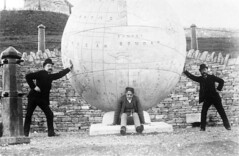
On the coast in the Purbeck Hills in Dorset is a splendid erection - a giant globe dated 1891 that was placed atop the cliff.


Around it are quotations from some of history's greats, including Shakespeare. But there is also this unattributed, yet familiar-sounding quotation.


It reads: "Let prudence direct you, temperance chasten you, fortitude support you, and justice be the guide to all your actions."

The cliffs have a long history of being mined for stone.

Here is a brief history from the Durlston website...

A Victorian Enterprise

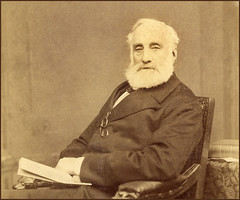
Durlston was owned and farmed by various farmers and landowners but, in 1863, George Burt purchased a significant part of Durlston and a new era began. George Burt was born in 1816, and worked locally as a stone mason before moving to London, at the age of 19, to work for his uncle John Mowlem. Using his wealth, Burt played a major part in the plans to transform Swanage from an 'old world village' to a fashionable seaside spa.

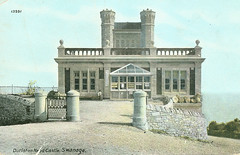
It was not until George Burt retired in 1886, that he turned his energies to developing further his estate with the newly commissioned Durlston Head Castle as its centrepiece. The Castle was constructed by a local builder, William Masters Hardy, and despite its traditional appearance, an iron frame lies behind its stone cladding.

The Castle has always been used as a restaurant of sorts but, in 1890, the upper floor was used briefly as a signal station by Lloyds of London.

Fired by a Victorian zeal for learning and the natural world, George Burt set about transforming the rest of his estate. The most spectacular of his many creations was the Great Globe. George Burt's developments were not confined to building work. His estate was landscaped and planted with a variety of plants from around the world and it is worth noting that 50 men were employed to maintain Burt's ' New Elysian landscape'.

George Burt's plans for his estate were not entirely altruistic. Various plans were laid for a major residential development at Durlston and 88 plots of freehold building land were offered in 1891. Such schemes continued well into the 1920s but met with little success.

The Victorian era was also a great age of fossil collecting. Durlston Bay, already famous for its geology, attracted the interest of W.R. Brodie whose initial finds in 1854 led to the large scale excavations by Samuel Beckles in 1857. According to the London Illustrated News he found ' 27 species of marsupial mammal about 16 of which are totally new to science'.

The arrival of the railway in Swanage in 1885, and later transport developments including a steady growth in car ownership, saw Durlston becoming increasingly accessible to visitors. The sea views, Tilly Whim Caves, Durlston Castle and Great Globe were then, as now, major attractions.

George Burt
George Burt

The Globe Supported (1890)
The Large Globe (1890)

Durlston Castle (1906)