Thursday, 25 June 2015

1913 Masonic outing pic for sale


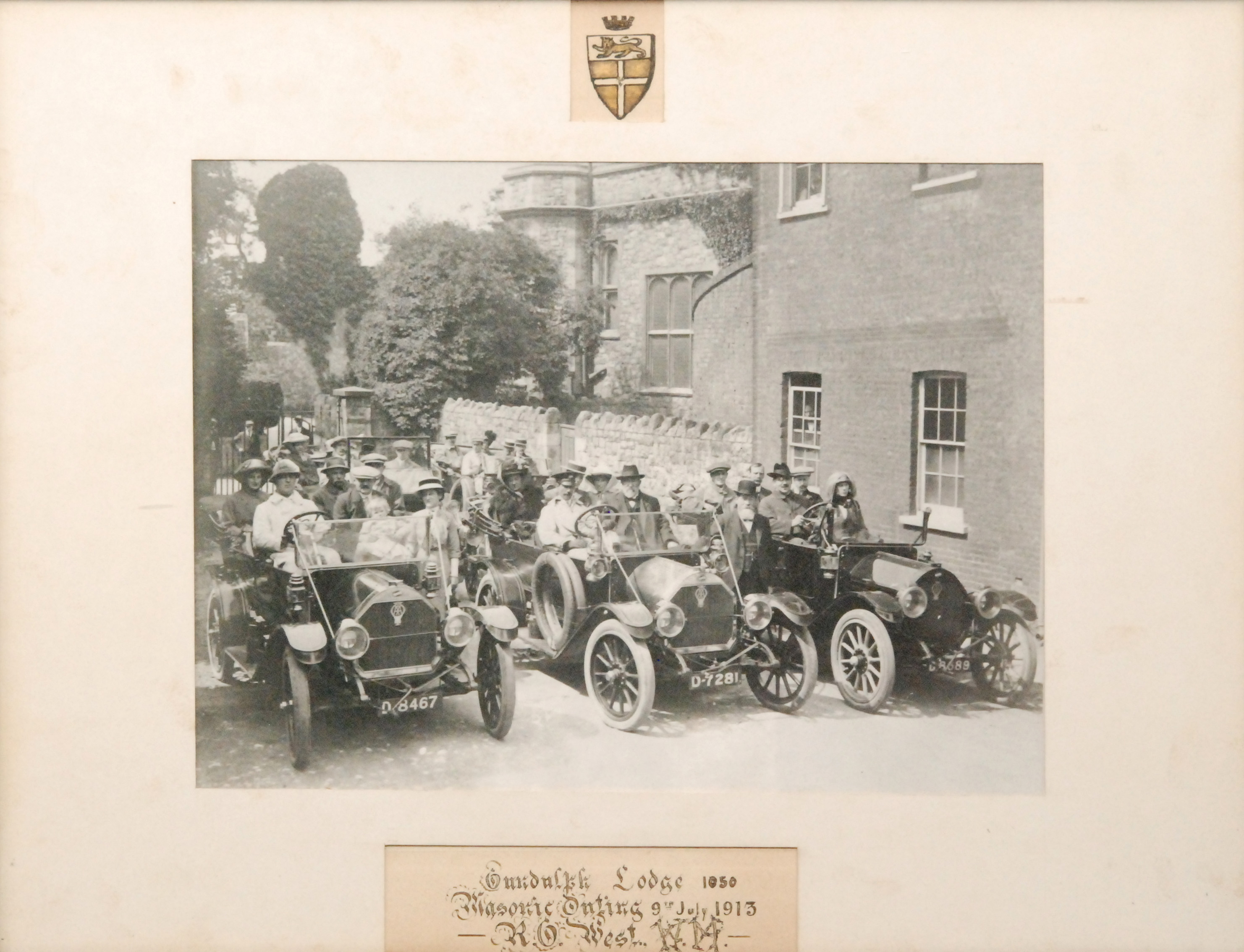
This photo of a Masonic outing is expected to fetch £40-£60 at Fieldings Auction house in the Midlands.

The catalogue description reads: An early 20th Century Masonic photograph of a motor parade with occupants of the Cundulph Lodge No 1050 outing 9th July 1913 by R G West.

Tuesday, 23 June 2015

Organ news!

THE RENEWING OF ONE OF ENGLAND’S FINEST ORGANS – A MAGNIFICENT REBIRTH

A chance to hear one of England’s Finest Organs, newly restored - at the Masonic Peace Memorial – known as Freemasons’ Hall, probably England’s finest Art Deco building and certainly one of London’s hidden architectural gems.

Henry Willis III directed the construction by his company in 1933 of the superb instrument in the
Grand Temple at the Masonic Peace Memorial building (Freemasons’ Hall), Great Queen Street,
London, WC2B 5AZ

For eighty years and more, this superb instrument has accompanied masonic ritual, public events
and the occasional concert.

With invaluable advice from the world-renowned distinguished organ consultant, Ian Bell, the
organ has been restored throughout by Harrison & Harrison of Durham, with the work completed
by April 2015, but the instrument as installed in 1933 survives entirely without alteration.

A third organ case, brilliantly matching the two original structures has been added immediately
above the dais, together with a new chorus of stops, topped by a Grand Tuba, in order to assist
further with the projection of the instrument into the body of the Grand Temple which, like the
whole building, is one of the very finest examples of the art deco style in Britain.

Dr. Thomas Trotter, Organist of St Margaret’s, Westminster Abbey and to the City of Birmingham,
is to give the opening concert on the newly restored instrument on Wednesday 30 September at
7.00.

Admission is by (free) ticket only and the audience is asked to be seated by 6.40 pm for a
short introductory talk on the restoration.

A commemorative programme will be on sale for £5, all proceeds going to support the work of the Royal College of Organists.

The event lasts just one hour to enable those travelling long distances to return home the same evening, and drinks and light refreshments will be available after the concert. A limited number of tickets is available from https://event.bookitbee.com/3138/inaugural-organ-concert/

Thomas Trotter’s programme is designed to appeal to all musical tastes. Included are Bach’s
Toccata in F, two pieces by Mozart, Freemasonry’s most prominent composer and three works on
a London theme– Eric Coates’s Knightsbridge March, Vierne’s Carillon de Westminster and a
work by the brother of the 1933 recitalist, Reginald Goss-Custard’s evocative Chelsea Fayre.
Monday, 8 June 2015

Bin Laden and Freemasonry

Here's an interesting article from Eurasia Review.


The Freemasonry on Bin Laden’s Bookshelf – OpEd

There was at least one big surprise among Osama bin Laden’s personal library, declassified a few days ago by the Director of the Office of National Intelligence. Bin Laden, al-Qaeda’s mastermind, had a copy of The Secret Teachings of All Ages by Manly Hall (1928), a classic of New Age, or alternative spiritual thought.
Was bin Laden a closet New Ager? No. Did he agree with the thesis of The Secret Teachings. Again, no.
Writing in Salon magazine, Mitch Horowitz says that he “seriously doubt[s]” that bin Laden had even read the book. I take a different view. Over the last several years, I’ve been researching both historical connections and antagonisms between Western alternative spirituality and Islam for my recently released book The Crescent and The Compass.
Although I was surprised that bin Laden owned a copy of this particular, lengthy, and somewhat romantic book, I was not surprised that he had an interest in its contents. I believe bin Laden had read at least some of The Secret Teachings’ more than forty chapters, and that it was of importance to him.
Before going into the why, I should point out that the subjects of Islam and Freemasonry would have interested bin Laden most in the book. Chapters on the pyramids, astrology, and so on, probably interested bin Laden less, if at all.
Relying heavily on Western sources, and quoting extensively, the chapter on Islam is not particularly strong, however. Hall was more of a mystic than a scholar, and I largely disagree with his theory. For Hall, secret, gnostic wisdom has been preserved and passed on through the religions, various secret societies and fraternities (such as the Freemasons), and esoteric philosophies and practices such as the Hebrew Qabbalah.
Bin Laden may well have welcomed the author’s criticism of the negative “attitude of Christendom toward Islam” in its opening passages. But any believing Muslim would be offended by Hall’s contention that, “The arcana of Islam may […] be demonstrated to have been directly founded upon the ancient pagan Mysteries performed at the Caaba centuries before the birth of the Prophet” and that “many of the ceremonials now embodied in the Islamic Mysteries are survivals of pagan Arabia.” (According to Islam, Muhammad received the Qur’an from the Angel Gabriel, not from pre-existing pagan traditions, which, from a mainstream Islamic perspective, are shirk — the sin of practicing idolatry or polytheism.)
In my view, the chapters about Freemasonry are likewise laborious, focusing on various alleged ancient influences more than on the history of the three-century-old fraternity itself.
But why would bin Laden own such a book?
It is quite possible that the al-Qaeda leader believed it to be an accurate representation of the beliefs of Freemasonry, which Islamists, today, regard as one of the leading foes of Islam. Notably another book on bin Laden’s bookshelf was Bloodlines of the Illuminati by Fritz Springmeier. This book presents Freemasonry as an integral element of the “New World Order” — behind all plots and revolutions, and inspired by Satanism — that al-Qaeda saw itself as fighting. Hence, the Fall 2010 edition of the online al-Qaeda magazine Inspire praised, “an outstanding group consisting of four men [who] created a cell to assassinate Freemasons in Amman, and [who] succeeded in executing a number of them.”
Secondly, it is probable that, although not interested in the Islamic scholarship in itself, bin Laden believed The Secret Teachings accurately represented Masonic or Western perceptions about Islam. In other words, that — like many of the other books bin Laden owned – he believed it gave some insight into the mindset of the enemy.
Ironically perhaps, radical, pan-Islamic politics has not always opposed Freemasonry. During the 19th century, several prominent, influential Muslim activists joined the fraternity, believing, sometimes, that could help in their struggles. These included Abd al-Qadir ibn Muhyi al-Din, leader of the Algerian resistance against the French; Sayyid Jamal ad-Din al-Afghani, founder of anti-colonial politics in the Middle East; and Muhammad Abduh, Grand Mufti and theologian.
By the end of the 1920s, however, European anti-Semitic and anti-Masonic conspiracy theories, introduced to the Middle East by Arab Christians, had become a part of both secular nationalism and pan-Islamism in the region. And it has remained important to Islamist and Jihadist organizations ever since.
What bin Laden’s bookshelf confirms is that, fed partly by Western conspiracy theories, the Islamist worldview is more complex than is generally believed. But the lack of comment about the al-Qaeda leader’s ownership of The Secret Teachings tells us that that isn’t going to change any time soon.

Masonic axe head


This axe head with masonic symbol is going under the hammer at Jones and Jacob in Oxfordshire with an estimate of up to £50. It's unclear how old it is, but it appears to have had some use.

Tuesday, 19 May 2015

Masonic coconut for sale


This rather splendid George III sliver coconut cup is going under the hammer at John Nicholson's auction house in Surrey. It has an estimate of £600-800.

The catalogue description reads: A GEORGE III SILVER MOUNTED MASONIC COCONUT GOBLET with three carved Masonic panels London silver mount 1801 5.5ins high.

Thursday, 14 May 2015

It's all in a handshake

From the Daily Telegraph...


New research suggests the strength of a person's hand-grip could predict the risk of heart attacks and strokes - and is a stronger predictor of death than blood pressure checks.


A firm handhake could indicate robust health, a new study suggests
The strength of your handshake could signal the chance of a future heart attack, a major study in The Lancet suggests.
The research found the vigour of a person's hand-grip could predict the risk of heart attacks and strokes - and was a stronger predictor of death than checking systolic blood pressure.
Experts said a grip test could be a simple, low-cost way to predict the risk of heart attacks and strokes.
The international study, involving almost 140,000 adults in 17 countries found weak grip strength is linked with shorter survival and a greater risk of having a heart attack or stroke.
It also found that grip strength is a stronger predictor of death than systolic blood pressure.
The researchers suggest that it could be used as a quick, low-cost screening tool by doctors to identify high-risk patients among people who develop major illnesses such as heart failure and stroke.
Reduced muscular strength, which can be measured by grip strength, has been consistently linked with early death, disability, and illness. But there has been limited research on whether grip strength could be used to indicate heart health.
The new study followed 139,691 adults aged between 35 and 70 living in 17 countries from The Prospective Urban-Rural Epidemiology (PURE) study for an average of four years. Grip strength was assessed using a handgrip dynamometer.
It is measured as the force exerted when a subject squeezes an object as hard as possible with their hands.
The findings show that every five kilos decline in grip strength was associated with a 16 per cent increased risk of death from any cause; a 17 per cent greater risk of cardiovascular death; a 17 per cent higher risk of non-cardiovascular mortality; and more modest increases in the risk of having a heart attack (seven per cent) or a stroke (nine per cent).
Overall, grip strength was a stronger predictor of all-cause deaths, including deaths from heart disease, than systolic blood pressure, which is normally seen as a "robust causal factor" for death, the study showed.
The associations persisted even after taking into account differences in other factors that can affect mortality or heart disease such as age, education level, employment status, physical activity level, and tobacco and alcohol use.
A low grip strength was linked with higher death rates in people who suffer a heart attack or stroke and non-cardiovascular diseases, for example cancer, suggesting muscle strength can predict the risk of death in people who develop a major illness.
Lead author Dr Darryl Leong, of McMaster University in Canada, said: "Grip strength could be an easy and inexpensive test to assess an individual's risk of death and cardiovascular disease.
"Further research is needed to establish whether efforts to improve muscle strength are likely to reduce an individual's risk of death and cardiovascular disease."
Commenting on the findings, Professor Avan Aihie Sayer, of Southampton University, and Professor Thomas Kirkwood, of Newcastle University, discuss whether grip strength could be a new biomarker of ageing.
Prof Sayer said the idea built on previous theories.
He said: "Loss of grip strength is unlikely to lie on a single final common pathway for the adverse effects of ageing, but it might be a particularly good marker of underlying ageing processes, perhaps because of the rarity of muscle-specific diseases contributing to change in muscle function."
The countries involved in the study were Canada, Sweden, United Arab Emirates, Argentina, Brazil, Chile, Malaysia, Poland, South Africa, Turkey, China, Colombia, Iran, Bangladesh, India, Pakistan, and Zimbabwe.
Doireann Maddock, Senior Cardiac Nurse at the British Heart Foundation, said: “The findings of this study are interesting, however it doesn’t explain why grip strength should be related to cardiovascular disease. More research is needed to understand any possible link between the two.
“The good news is we already know there are several established risk factors for cardiovascular disease and an NHS health check can assess your risk. So if you’re over 40 years old speak with your GP or practice nurse about getting this done.
“Whatever your situation, you can help reduce the impact of any risk factors by adopting healthy lifestyle habits such as stopping smoking, keeping active and eating a healthy diet.”

Tuesday, 5 May 2015

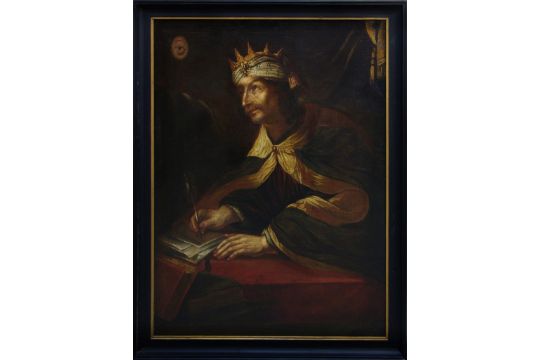
Solomon painting for sale

Lot 66 - King Salomon, Claude Vignon (circle) Oil on canvas, unsigned. King Salomon sitting at a table with


Here's King Solomon designing his temple. The painting is going under the hammer at Anrikvity Praha in the Chech Republic and has an estimate of 20,000 Euros.

It is described thus:

Oil on canvas, unsigned. King Salomon sitting at a table with books and probably designing construction of the temple. Crown with five visible spikes probably symbolizes a pentagram (Masonic symbolism), upper left is stylized "eye of God". Vignon Cloude (*1593 Tours - †1670 Paris). France, 1st half of 17th century, dimensions 85 x 117 cm, framed. Restored. Condition 2